Iran–Israel Conflict : History, Causes, and Global Impact in 2026
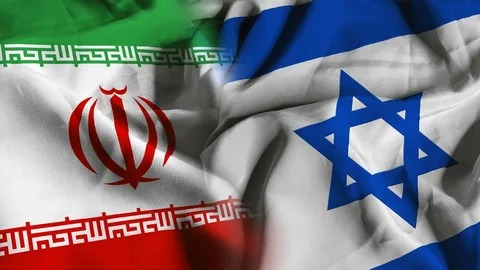
The Iran–Israel Conflict: Explore history, causes, the recent 2026 escalation, global impact, and ongoing diplomatic efforts shaping Middle East security.
Introduction
The Iran-Israel war is one of the most complex and old conflicts in geopolitics in the modern world. This conflict is premised on the clash of ideologies, the politics of power in the region, and matters of security that have now led to direct military confrontations upon observing the indirect confrontations.
However, it has been increasing tremendously throughout the years (particularly, 2025-2026) and caught the eyes of world powers, and is a threat to the overall stability in the region.
Iran–Israel Historical Background
Iran and Israel had not always been bitter enemies. Before the Iranian Revolution, Iran and Israel had diplomatic and economic relationships. Nevertheless, the revolution made Iran an Islamic Republic that was adamant about the existence of Israel.
Ever since, Iran has continuously condemned the policies of Israel towards Palestinians, and Israel has considered Iran a significant threat given its ambitions to develop nuclear weapons and its backing of militant organizations. Gradually, this competition was extended to a wider regional power game between various countries and non-state actors.
Key Causes of the Iran–Israel Conflict
1. Ideological Differences
The leadership of Iran is based on the anti-Israel policy which is influenced by the ideology of the revolutionary movement. The state of Israel views Iran’s rhetoric as a threat to its existence, while Iran considers Israel to be an invalid state. The two opposing belief systems between the two groups create a persistent state of conflict between them.
2. Nuclear Program Concerns
The Israelis have felt threatened by the nuclear program of Iran. The failure of the Joint Comprehensive Plan of Action boosted the suspicions that Iran could develop nuclear weapons. Israel has already issued several statements to the effect that it will not condone that to the extent of exercising force.
3. Proxy Warfare
The proxy groups have been the main fronts through which much of the fighting has been done. Iran sponsors other organizations like Hezbollah and Hamas, which have been involved in wars with Israel. Such indirect warfare has enabled both parties to evade a full-scale war until recently.
4. Regional Influence
The two nations desire to dominate the Middle East. Iran is seeking to increase its power through alliances and militia, whereas Israel is seeking to reverse this rise by the use of military power and international associations.
Shift from Shadow War to Direct Conflict
The Iran-Israel war was also a low-profile war over the decades, whereby cyberspace attacks, assassinations, and low-level strikes were the order of the day. This, however, is expected to radically transform in the year 2024.
This situation was uncontrollable in the larger Middle East war,s especially when it was confronted by Iranian-sponsored groups. By 2025, Israel had launched serious attacks on the Iranian infrastructure,e undermining the Iranian allies in the region.
In 2026, the culmination of the situation took the humanitarian U.S-Israeli military action Operation Epic F, ur in which hundreds of attacks were launched against Iran.
Iran’s Response
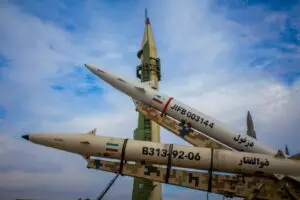
Iran conducted a large-scale missile and drone operation throughout the entire region. The attackers executed strikes against Israeli territories, American military installations, and critical Middle Eastern facilities.
Such repressive attacks proved that Iran had military capabilities and it was ready to cease the war. The shipping routes were also affected because of the strikes, especially in the Strait of Hormuz,z which is a major route used in transporting the oil. The scope of the answer was a shift from small skirmishes to a bigger war on a wider scale.
Latest News on Iran–Israel Conflict (March 2026)
The Iranian-Israeli conflict escalates in March 2026 through missile attacks and Israeli airstrikes,s and worldwide disruptions to the oil industry,y and ongoing international diplomatic efforts.
1. Full-Scale War Intensifies
The Iran-Israel confrontation later led to full-blown war in March 2026 after the simultaneous attacks by the United States and Israel on the military installations, nuclear-related installations, as well as other strategic infrastructures of Iran. These colossal strikes hit various locations in Iran with a lot of devastation, indicating the shift from small skirmishes to an open conflict.
2. Iran’s Strong Retaliation
In its turn, Iran started the waves of ballistic missiles and drones to hit large cities and military facilities of Israel. These attacks led to lives lost, destruction of infrastructure and panic among the civilians. The retaliation of Iran proved that it has developed missiles and readiness to take the conflict to another level, beyond the proxy warfare to a face-to-face confrontation.
3. Oil and Energy Crisis
The war has had very devastating effects on the international energy markets, especially following attacks on major Iranian energy installations and increasing tension in the Strait of Hormuz. It is a very critical route in which a significant percentage of the oil in the world is transported and instabilities in this route have resulted in sudden surges in oil prices to affect entire economies across the world.
4. Rising Global Impact
The Iran-Israel dispute cannot be a domestic matter in the Middle East as it is being felt all over the world. The world nations are being put under economic pressure due to the rising fuel costs, disrupted trade routes, and unstable market On .In the other hand, security has also experienced an increase, and this highlights the international aspect of the conflict.
5. Diplomatic Efforts and Peace Talks
Diplomacy can be used to de-escalate the situation, but the violence prevails in several countries, and foreign bodies are attempting to employ diplomacy as an approach to curbing the violence.
The US has offered peace schemes and states such as Pakistan, among others, are trying to broker talks and global impact. Nevertheless, the significant suspicion between Iran -Israel escalation is still a major obstacle to valuable progress.
Human and Economic Impact
1. Civilian Casualties
Both parties have suffered huge civilian casualties in the conflict. The airstrikes, missile bombings, and urban warfare have been very destructive as homes, schools, and other public infrastructures have been damaged.
2. Economic Disruption
The fighting has significantly affected the world markets. The Middle East instabilities saw the rise of oil prices and the disruption of international trade by shipping. Flights have been canceled, and the supply chains severely disrupted.
3. Refugee Crisis
As a result of the violence, several civilians were causes displaced, and this led to a growing humanitarian catastrophe. The affected countries have been engaged in a battle to check the exodus of displaced persons.
Conclusion
The March 2026 Iran–Israel Conflict thus become one of the most dangerous conflicts ever in the Middle East, with heavy missile firing, bombing at regular intervals, and the world is worried regarding the security of the region and the oil markets of the world.
The diplomatic negotiations and mediation have still not yielded the desired results, as the situation remains unstable with severe humanitarian and economic consequences involved. The Iran-Israel Conflict is among the issues that should be comprehended and settled so that peace and stability can be established.


